
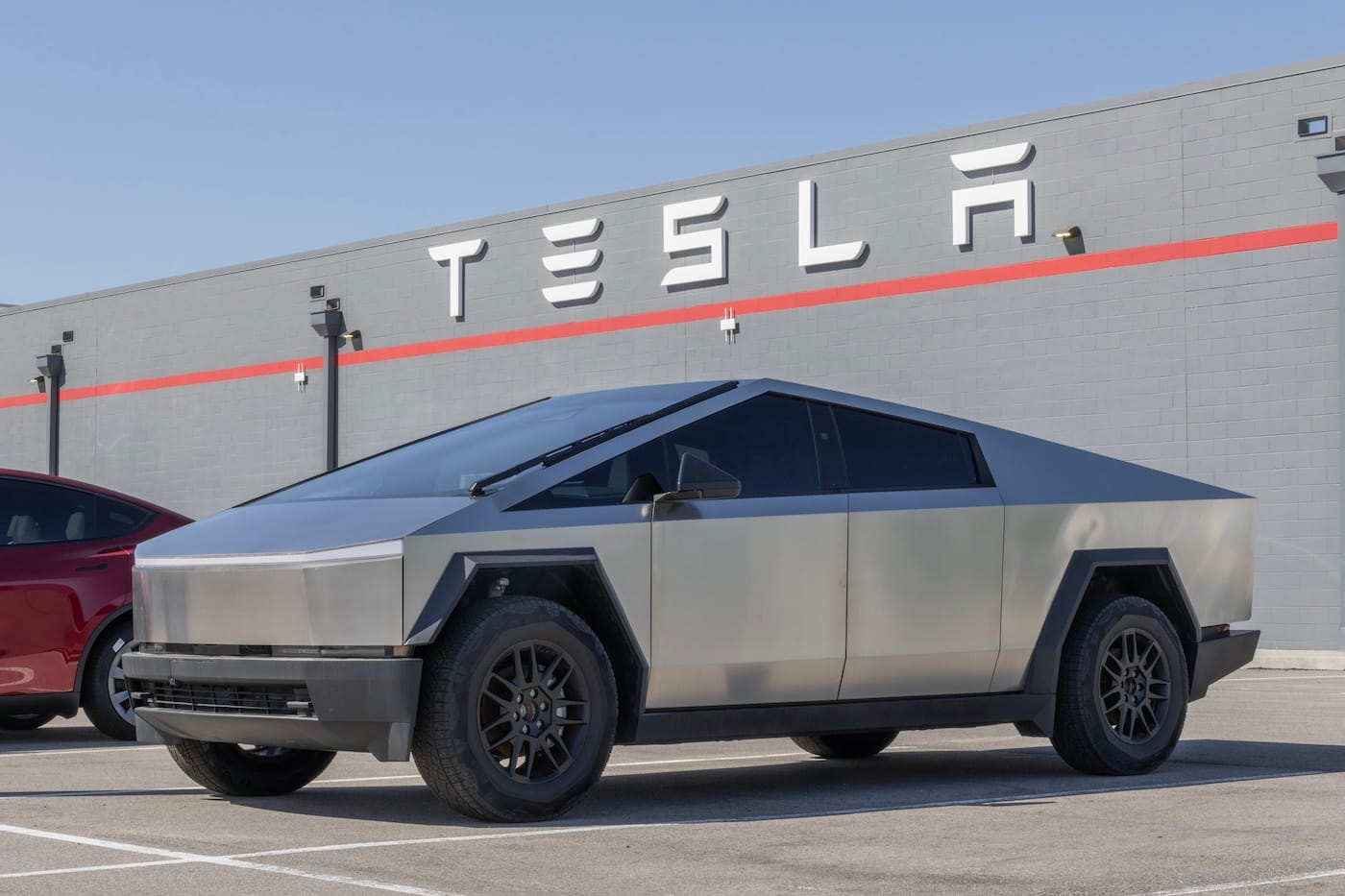
After years of delays, quality problems, recalls, and sales that fell far short of Elon Musk’s predictions, Tesla is preparing to wind down the manufacturing of its douchiest of all vehicles, the Cybertruck.
Musk made the announcement on X, saying the company was switching gears to “make room for increased Cybercab production,” referring to Tesla's two-seat autonomous vehicle, as Reuters reports. The decision marks a retreat from a project Musk once predicted would sell 250,000 trucks annually — a goal that was never reached.
Musk has reportedly continued to defend the vehicle, calling it the “best vehicle Tesla has ever made” and the production wind-down the “end of an era.”
When Tesla first unveiled the Cybertruck in 2019, it was originally advertised with a starting price of $39,900 and a planned 2021 launch. After several delays, customer deliveries finally began in November 2023, with the starting price having climbed to $60,990.
Since then, the Cybertruck has struggled with recalls and quality problems. According to Reuters, the National Highway Traffic Safety Administration has recorded 11 recalls since the truck went on sale, including a 2024 recall involving accelerator pedals that could become trapped, and a 2025 recall affecting more than 46,000 vehicles over exterior panels that could detach while driving. In April 2026, another recall affected 173 trucks over brake rotor problems that could cause wheel studs to separate.
As SFist reported last year, Tesla also announced it was redesigning its door handles following 140 reports of occupants becoming trapped inside.
In a lawsuit filed in March in Alameda County Superior Court, Jordan Miller, the sole survivor of a 2024 Cybertruck crash in Piedmont that killed three people, alleges that faulty door locks trapped him inside the burning vehicle and contributed to his extensive injuries.
The lawsuit follows a separate case filed last year by the parents of two of the people killed in the crash, who allege their daughter died from smoke inhalation and burns after becoming trapped inside the vehicle.
Sales have also fallen well short of Musk's projections. Tesla sold 38,965 Cybertrucks in 2024, followed by just 20,237 in 2025, a 48% decline, according to Kelley Blue Book, per Reuters. The company's third-quarter 2026 financial update grouped Cybertruck deliveries with its other models, but reported that combined category's deliveries had fallen 48% year over year, to 8,295 vehicles.
The company had reportedly installed manufacturing capacity for more than 125,000 Cybertrucks annually at its Gigafactory near Austin, Texas. Automotive analysts have pointed to the truck's high price and limited demand as major obstacles, although the broader market for electric pickups has also struggled. Ford and other automakers have faced similar difficulties selling electric trucks in the US.
As SFist reported in 2024, the company temporarily halted production at its Texas facility amid reports of inconsistent production schedules and weakening demand — just a year after its release.
Reuters reports that the Cybertruck's unusual construction and sharp exterior also limited its potential overseas. European pedestrian-safety regulations present particular problems for the vehicle's rigid structure and angular design.
“Anywhere where you have crash regulation that takes into account pedestrian impact, that Cybertruck won't go, can't go,” former Aston Martin CEO Andy Palmer said, speaking to Reuters.
Palmer said the decision to scale back production was a predictable response to the truck's inability to meet sales targets.
Musk is instead betting heavily on the Cybercab, which Tesla unveiled in 2024. The two-seat vehicle has no steering wheel or pedals and is designed to operate as part of a network of autonomous taxis. As CBS News reports, production began at Tesla's Texas factory in April, and the company started offering paid rides with a limited fleet in Austin in September.
However, the robotaxi program is still in its early stages. According to the Texas Department of Motor Vehicles, roughly 570 of the more than 1,200 Tesla robotaxis operating in the state are Cybercabs, with the remainder primarily Model Y vehicles, according to Reuters. The National Highway Traffic Safety Administration also opened an audit in September into Tesla's self-certification of the Cybercab, after the agency requested additional information about its compliance with federal vehicle safety standards.
Tesla has not clarified whether Cybertruck production will be moved elsewhere or phased out entirely. Its Texas facility is currently the only known plant equipped to manufacture the truck's specialized components.
Cybertruck lead engineer Wes Morrill defended the project on X, calling it “an incredible technology development platform” that “lives on through Cybercab.”
Related: Tesla Temporarily Halts Cybertruck Production, Amidst Rumors of Slumping Demand


